
IMAGES from matches played across European leagues on Saturday
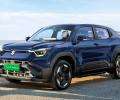
Maruti Suzuki's e-Vitara marks its high-stakes EV debut with strong export ambitions, lifting its stock even as analysts caution over pricing and fierce competition.

Maruti Suzuki India Ltd (MSIL), the largest passenger vehicle manufacturer in India, has set a road map to expand its global presence by targeting exports of 800,000 units by the end of this decade -- almost double the approximately 280,000 units sent abroad in 2023-24, Rahul Bharti, executive director, corporate affairs, told Business Standard. The company's upcoming electric vehicle (EV) strategy is expected to play a crucial role in its global ambitions.

Siam argues that a 2040 ban could destabilise ongoing and future investments and threaten millions of jobs in the automotive value chain.
'We remain in touch with the Chinese side, in Beijing as well as in Delhi, to bring predictability in the supply chain.'

However, the company has not provided a timeline for the launch of the small electric car.

Maruti Suzuki's contribution to the sales revenue of its Japanese parent, Suzuki Motor Corporation (SMC), has touched the highest-ever figure during April-December of FY23. According to SMC's results declared on Tuesday, Maruti's share in its global revenues jumped from 33.42 per cent in April-December of FY22 to 40.93 per cent in the corresponding period of FY23.

'The favourable rupee-dollar exchange rate, there are opportunities we can tap.'
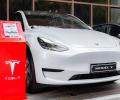
With India's EV penetration at just 2.5 per cent, the market presents an opportunity -- provided Tesla gets its pricing right.

The country's largest car maker Maruti Suzuki India on Monday said its cumulative exports have crossed one million units with the milestone car headed for Denmark.

Maruti will launch its first electric vehicle (EV) in the next financial year (FY24), and will roll out six EVs in the country by FY30, the automaker's parent firm Suzuki said on Thursday.

These 10 stocks represent the best mix of value and growth, offering relatively low price-to-earnings and price-to-book ratios, a high return on equity, and sufficiently high potential from current levels.

Recently, Suzuki Motor Corp (SMC) in an investor presentation expressed strong intent to enter the electric vehicle (EV) space. This is part of a larger strategy the Hamamatsu-based firm has drawn up in developing electrification of technologies as it seeks to achieve carbon neutrality. The significance of this presentation is that it marked the first time that the Japanese carmaker spelt out its EV strategy with well-defined timelines. SMC plans to develop electrification technologies by 2025, fully implement them in products from the same year, and make a full-scale quantitative increase from 2030.
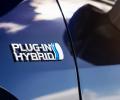
Plug-in hybrids have two engines and the electric part has a much larger battery than in the regular hybrids. Car companies, led by the Japanese, are pushing the Indian government to look at hybrids in the interim if it wants to reduce carbon emission.

Airports across the country witnessed chaotic scenes on Friday after dozens of flights were either delayed or cancelled after a widespread global computer outage that also hit operations like cash withdrawal at some banks, and impacted functioning of some brokerages. Globally, the Microsoft cloud outage led to US airlines cancelling flights, but the tech giant later reportedly said its cloud services outage in the Central US region has been resolved.

Equity markets opened the trade on a lower note on Monday, extending the previous day's fall, with the Sensex tanking 785 points in early trade, mirroring an extremely weak trend in Asian markets. Also, unabated foreign fund outflows and selling in index majors Reliance Industries, Infosys and TCS added to the weak sentiment. The BSE benchmark Sensex was trading 785 points lower at 56,412.14. The NSE Nifty declined 243.35 points to 16,928.60

Equity benchmarks ended higher on Friday helped by buying in index major Reliance Industries along with fresh foreign fund inflows. Extending its previous day's rally, the 30-share BSE benchmark climbed 203.01 points or 0.34 per cent to settle at 59,959.85. During the day, it jumped 376.33 points or 0.62 per cent to 60,133.17.
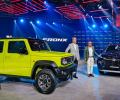
That means a manufacturer looking at a market like India needs to decide whether small, cheap cars or small, expensive cars or both will work better for them, says Pavan Lall.

Equity benchmark Sensex extended its winning run to the fourth day running on Monday and reclaimed the 58,000-level, tracking firm global trends and fresh foreign fund inflows. Buying in index major Reliance Industries added to the momentum. The 30-share BSE benchmark climbed 545.25 points or 0.95 per cent to settle at 58,115.50. During the day, it jumped 600.42 points or 1 per cent to 58,170.67. The broader NSE Nifty advanced 181.80 points or 1.06 per cent to 17,340.05.
Titan, Maruti Suzuki India, Asian Paints, Mahindra & Mahindra and Hindustan Unilever Limited were the biggest drags on the Sensex, tumbling up to 5.05 per cent. In contrast, ITC, Dr Reddy's Laboratories, Tech Mahindra and UltraTech Cement were among the gainers.

From the 30-share pack, Indusind Bank, Axis Bank, Maruti Suzuki, Bajaj Finance, Bajaj Finserv, UltraTech Cement and Mahindra & Mahindra were the biggest drags, tumbling up to 7.63 per cent.

Benchmark indices fell on Monday with the BSE Sensex declining 306 points, mainly dragged down by Reliance Industries. Foreign funds outflow also added to the overall bearish trend in equities on Monday. The 30-share BSE benchmark fell 306.01 points or 0.55 per cent to settle at 55,766.22. During the day, it declined 535.15 points or 0.95 per cent to 55,537.08. The broader NSE Nifty dipped 88.45 points or 0.53 per cent to 16,631.

From the Sensex pack, State Bank of India, Axis Bank, IndusInd Bank, Tech Mahindra, HCL Technologies, Tata Consultancy Services, Maruti Suzuki, Tata Steel and Tata Motors were the major gainers. Power Grid and HDFC Bank were the laggards from the pack.
Benchmark indices Sensex and Nifty gave up early gains to close lower for a fourth straight session on Thursday due to selling in IT and banking shares amid weak global equities. The 30-share BSE benchmark settled 98 points or 0.18 per cent lower at 53,416.15. During the day, it hit a high of 53,861.28 and a low of 53,163.77. The broader NSE Nifty also pared initial gains and ended 28 points or 0.18 per cent down to settle at 15,938.65.

The limited availability of flexible (flex)-fuel vehicles in the Indian market and the slow rollout of ethanol-blended petrol by oil-marketing companies (OMCs) remain major obstacles to achieving widespread use of biofuels in the transportation sector in India. Recently, two Union ministers have emphasised India's biofuel potential, arguing that it has the capacity and potential to lead a transition towards widespread biofuel adoption. Road Transport Minister Nitin Gadkari signalled that this transition is well underway and urged car manufacturers to quickly adapt and introduce new biofuel-run vehicles, lest the government resort to taxing diesel vehicles.
Titan was the top gainer in the Sensex pack, rising 3.5 per cent, followed by Kotak Bank, SBI, Maruti Suzuki, Bajaj Finance, HUL, Axis Bank and Sun Pharma. On the other hand, NTPC, Tech Mahindra, PowerGrid and Infosys were the laggards.
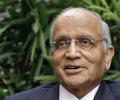
The regulatory burden is the highest on small cars, a key segment of the Indian automobile industry and having a uniform tax structure across all segments of vehicles will not augur well for the sector growth, according to Maruti Suzuki India chairman RC Bhargava. He also said India's economic growth rate could be higher if the manufacturing sector grows fast, which 'unfortunately' has remained a laggard despite the best efforts of the Narendra Modi-led government at the Centre due to implementation gaps at the ground level. "The burden of regulatory changes on the small cars is far higher than the regulatory burden on big cars and that is changing the whole market behaviour.

Equity benchmark Sensex ended 127 points higher on Friday, primarily led by gains in auto, metal and power sector stocks amid positive cues from global markets.
Equity benchmarks Sensex and Nifty halted their five-day rally on Tuesday and settled deep in the red, mirroring weak global markets, with decline in index heavyweights Reliance Industries, Infosys and HDFC Bank. Despite opening with gains of over 200 points, the 30-share Sensex turned highly volatile and tumbled 709.17 points or 1.26 per cent to close at 55,776.85. During the day, the benchmark index plunged 1,067.07 points or 1.88 per cent to 55,418.95. The broader NSE Nifty also declined 208.30 points or 1.23 per cent to close at 16,663.

India's electric mobility goal, which has so far been riding on two wheels, is all set to graduate to four wheels. At least, the journey has begun. Hyundai Motor India said it would invest Rs 4,000 crore till 2028 to launch half-a-dozen electric vehicles (EVs) in India. It would eventually straddle premium and mass segments. The first of these - the electrified version of an internal combustion engine (ICE)-powered model - will go on sale as early as next year.

IndusInd Bank was the top laggard in the Sensex pack, cracking around 10 per cent, followed by HDFC, Maruti Suzuki, Axis Bank and UltraTech Cement. On the other hand, TCS, Infosys, ITC and HCL Tech closed with gains. NSE Nifty plunged 313.60 points or 3.43 per cent to 8,823.25.

The company, which unveiled its compact multi-purpose vehicle Triber in India, is bringing the MPV only in petrol engine option as part of the strategy even as it prepares to introduce electric vehicles in the near future.

India wasn't applying widespread crash testing like foreign countries do, so manufacturers didn't see the need for an investment focus on safety. Customers rarely walked into showrooms asking for the safest car. They wanted the cheapest or the most fuel-efficient or the best-looking car.

For Hero MotoCorp, India's largest two-wheeler company, it's a calculated gambit to revive Harley-Davidson whose ride in India has been anything but easy since it got here.When automotive firms embark on alliances, it's a roll of the dice on how such marriages will play out.

Mercedes Benz, BMW and Audi have sharply increased their sourcing from India.

Tata Zica was designed by an international team resulting in a more modern look.

The GSX-R1000 is now on offer in an all-new, even more lethal avatar, laced with an ultra-modern electronics suite. Arun Mohan Nadar got first taste of the bike at the Kari Motor Speedway in Coimbatore.

It will be fitted in a new car codenamed YL7, which will replace A-Star and Estilo.

Axis Bank emerged as the biggest gainer in the Sensex pack, surging 6.62 per cent, followed by SBI at 5.88 per cent.

To merge arms, sell stake in combined entity to CIE for Rs 770 cr; to use proceeds to buy 13.5% in Spanish firm for Rs 740 cr
